This past weekend, the Force Therapeutics team traveled to Orlando for the National Association of orthopedic Nurses' 46th Annual Congress: three days of sessions, poster presentations, hallway conversations, and a host of interactions that reminded us why this community is unlike any other in healthcare.
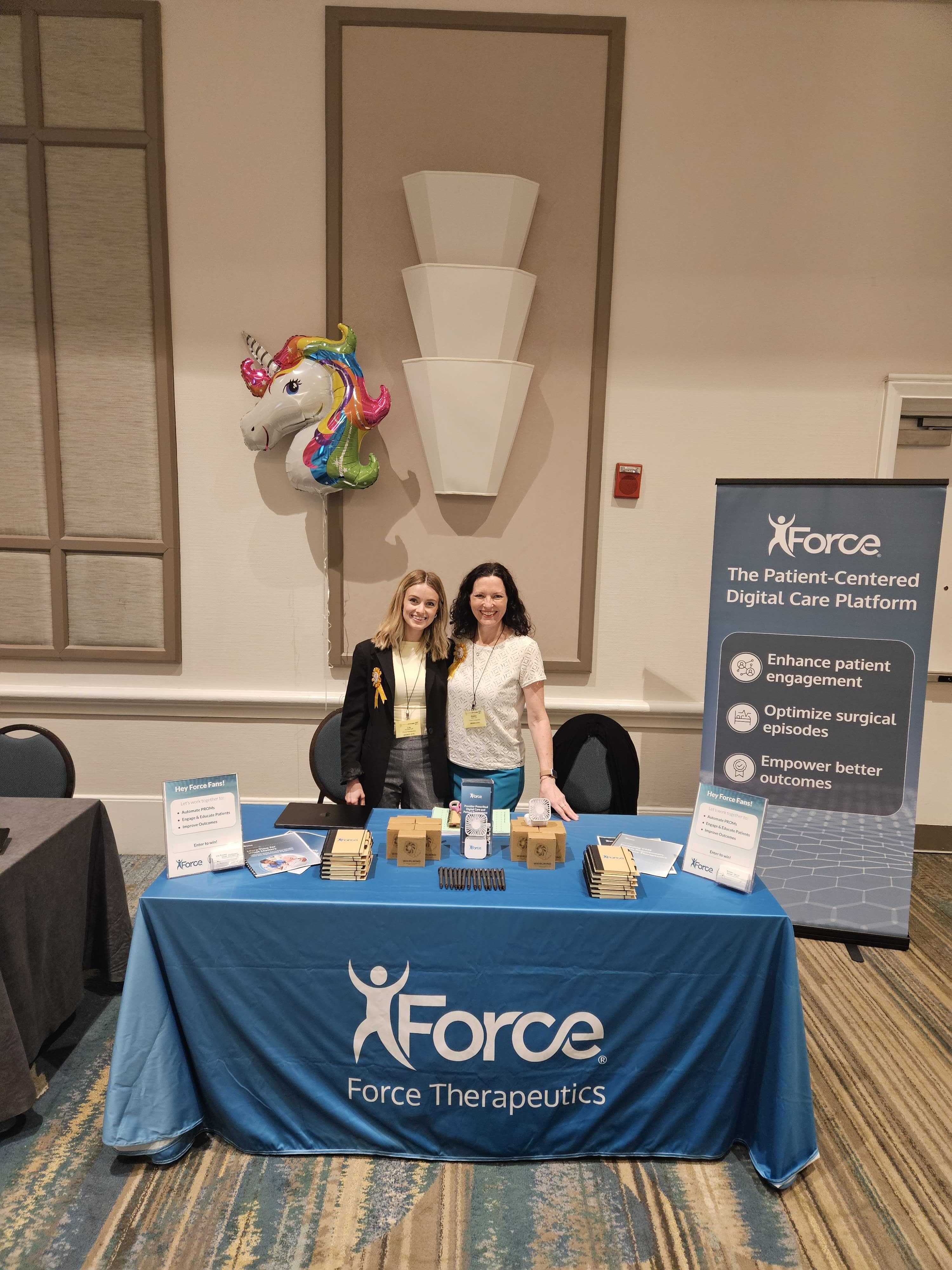
We came to listen and left with significant insights and a great deal to think about. Here are the top 6 learnings we took away this year:
1) Orthopedic Nursing Is the Backbone of Successful Programs
The through line at NAON this year was a systematic contradiction. Orthopedic programs are delivering strong outcomes, but the effort required to do so is becoming increasingly unsustainable. Nurse navigators and care coordinators described workflows that work, but just barely–held together by manual coordination, constant phone management, and the sheer dedication of clinical teams who refuse to let patients fall through the cracks.
That dedication was on full display at every session we attended and in every conversation we had. But nurses are realizing that dedication alone can't scale programs and combat burnout. And that tension between what care teams are achieving and what it's costing them to achieve it shaped almost every discussion we had at the conference. Despite these challenges, everyone we spoke to was open, energized, and deliberate, seeking new ways of solving old problems, all with a common goal in mind: advancing patient care.
2) Operational Burden Is High, Even in High-Performing Programs
This environment has created strong interest in automation tools as a way to reduce friction. Justifiably unsatisfied with mere efficiency, hospitals are now aiming to achieve sustainability by enabling teams to maintain high-quality patient care without overextending limited resources.
This is because, while many orthopedic programs are succeeding, they are doing so through significant manual effort. For example, inbound phone management alone, fielding oftentimes redundant patient questions, represents a major burden, with staff frequently handling inquiries from both current and former patients. Likewise, education, often delivered through a mix of in-person, printed materials, and ad hoc interactions, lacks standardization and requires significant manual oversight.
So even when programs meet their goals, the process is labor-intensive and difficult to scale. Consequently, and as we heard repeatedly at the conference, nurses and navigators are trying to find ways to partner with their executive teams and have productive conversations to identify solutions that help them work smarter while improving the patient experience.
3) The Hidden Workload After Discharge
A recurring theme across sessions was the "post-discharge gap." While discharge is intended to transition patients out of the hospital with the information they need to recover effectively, in reality it often marks the beginning of confusion and fragmentation for many patients.
Often, patients leave the hospital with instructions and good intentions. But then they go home and forget what they were told, or can't find it again when they need it, and end up calling the hospital or care team with questions that were already answered. Subsequently, care teams spend significant chunks of their day fielding phone inquiries. This creates a reactive cycle that consumes time and resources, while also signaling a deeper issue: education without ongoing access and reinforcement is insufficient.
At the same time, responsibility for the patient becomes less clearly defined once they leave the hospital, especially when it comes to the various data collection requirements currently in place. Even though outcomes may have to be measured up to a year after discharge, there is often no structure or accountability systems to support patients throughout that period. This leaves nurses managing issues as they arise rather than guiding recovery proactively.
4) PROMs and the Growing Data Burden
No topic generated more uncertainty at NAON this year than patient-reported outcomes measures. The gradual expansion of PROMs requirements, specifically the CMS THA/TKA PRO-PM, is introducing new layers of complexity at a moment when many programs are already trying to catch up.
A live audience poll during a session hosted by Hartford HealthCare and OrthoVirginia made the range of familiarity striking. When asked how familiar they were with the CMS THA/TKA PRO-PM, 44% of attendees said they actively support or manage reporting, but 24% described themselves as still trying to understand it, 20% said they understand the requirements without yet acting on them, and 10% had not heard of the measure at all. A second poll on voluntary reporting participation was equally telling: 51% of attendees said they hadn't participated, while only 27% reported participating and feeling good about their results.
This represents a significant system gap. When reporting requirements evolve faster than organizations can build infrastructure to support them, the burden almost always lands on already-stretched clinical teams. And when education, engagement, and outcomes tracking live in separate tools, as they often do, generating meaningful data becomes as much an operational challenge as a clinical one.
5) Patient Engagement and Education In Tandem
One of the more nuanced insights from NAON 2026 came from discussions around patient education. While education remains a cornerstone of orthopedic care, there is growing recognition that information alone does not drive outcomes.
Poster sessions and peer conversations revealed that many digital education efforts rely on static materials with limited ability to track patient engagement or reinforce patient interaction.
Effective digital patient education is not simply about digitizing content and then delivering it to patients to navigate alone. Rather it is about creating continuous, interactive experiences that directly guide patients through recovery. That includes personalizing education, monitoring engagement, reinforcing key behaviors, and providing timely support when needed. The goal for digital patient education shouldn't be to merely replicate a packet online, but to deliver a stronger level of engagement as can be achieved through manual and in-person tools, ensuring every patient has access to high-quality care.
6) Same-Day Surgery Is Here To Stay
Another session that drew significant interest was a presentation from the Palm Beach Health Network on same-day discharge after joint replacement. Their findings were significant: same-day surgery rates climbed from 18% in 2024 to 39% in 2025 to 47% in 2026, nearly tripling in two years, driven by enhanced recovery protocols, multidisciplinary commitment, and an iterative approach to continuous improvement.
What struck us most wasn't the numbers; it was the process. The program evolved through trial, adjustment, more staff education, and a lot of cross-disciplinary coordination. Patient selection, pain management, and early mobilization were all critical, but so was managing post-operative considerations that, if not addressed proactively, could turn a planned same-day discharge into an unexpected overnight stay.
As same-day surgery volumes grow, the post-discharge support gap discussed above only widens. Patients go home faster, recover at home longer, and counterintuitively need more, not less, guidance during that window to recovery.
An Event Worth Remembering
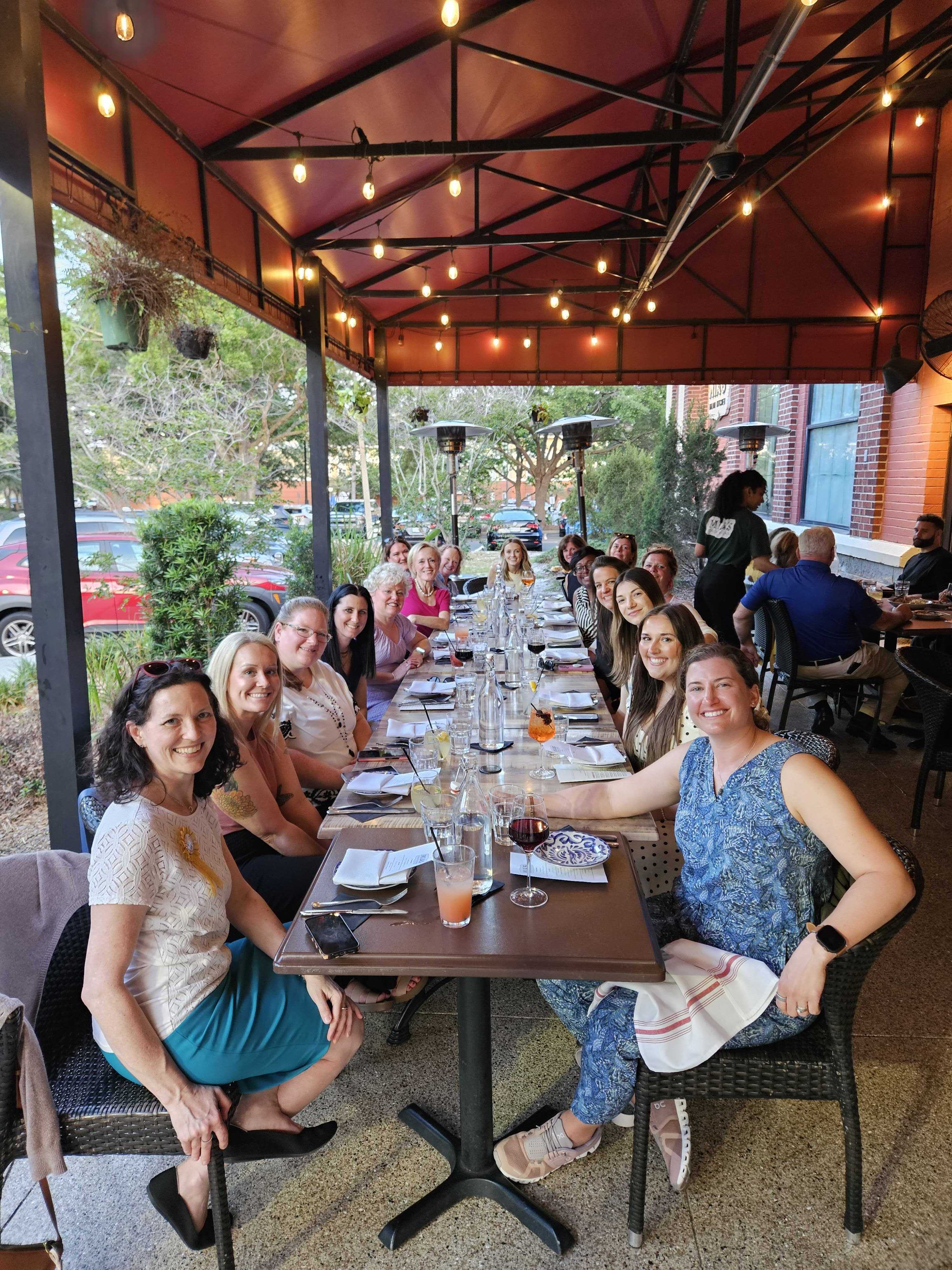
One of the highlights of our time in Orlando didn't happen in a session room. On April 19th, the Force Therapeutics team hosted a private dinner with a group of nurses, navigators, and clinical leaders to step away from the hubbub of the conference and create space for deeper conversation. What followed was one of those rare conversations that can't be planned.
We heard about the work that doesn't make it into presentations, about patients they stay late for, about the pride they feel when a recovery goes well, and the weight they carry when it doesn't. We're grateful to everyone who joined us.
NAON 2026 reinforced something we believe deeply: the challenges in orthopedic care today aren't isolated. The discharge gap, the operational burden, the complexity around PROMs are all connected. And solving for any one of them in isolation misses the point.
What care teams need is a more connected approach that brings patient engagement, education, and outcomes tracking together across the full episode of care, reduces administrative friction without reducing care quality, and scales with the demands being placed on clinical teams rather than against them.
We'll be taking everything we heard at NAON back into our work, and we're grateful to the orthopedic nursing community for the generosity with which they shared their experiences.
Already looking forward to NAON 47 in May 2027.
Interested in learning how Force Therapeutics empowers orthopedic nurses and programs? Contact us through the form below: